Our group works at the intersection of cognitive, neuro-, and computer science, with a primary focus on the dynamics and mechanisms of social interaction and interpersonal coordination. We develop experimental and computational methods for measuring interpersonal processes at the behavioural, physiological, and neural levels.
“Self, other, and we” mechanisms
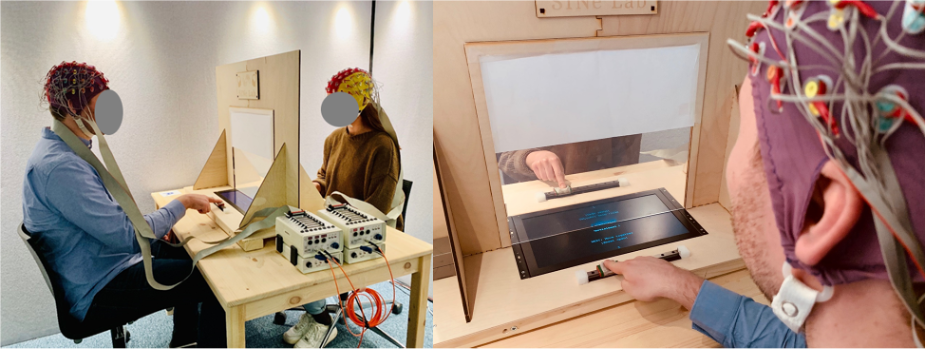
Successful social interactions depend largely on inferring and integrating behaviour and mental states of others with our own, which require an evolving balance between integration and distinction of “self” and “other” in interaction. We are interested in the mechanisms and factors underlying the changing dynamics of self-other integration and segregation during interpersonal coordination, and how these facilitate social interaction and consequently lead to different social outcomes.
In addition, we are interested in weather real-time prediction of others’ bodily and mental states is influenced by inter-individual self vs. other monitoring abilities.
Selected publications:
Konvalinka, I., Sebanz, N., & Knoblich, G. (2023). The role of reciprocity in dynamic interpersonal coordination of physiological rhythms. Cognition, 230, 105307.
Zimmermann, M., Lomoriello, A. S., & Konvalinka, I. (2022). Intra-individual behavioural and neural signatures of audience effects and interactions in a mirror-game paradigm. Royal Society Open Science, 9(2), 211352.
Heggli, O. A., Cabral, J., Konvalinka, I., Vuust, P., Kringelbach, M. L. (2019). A Kuramoto model of self-other integration across interpersonal synchronization strategies. PLOS Computational Biology, 15(10): e1007422.
Koban, L., Ramamoorthy, A., Konvalinka, I. (2019). Why do we fall into sync with others? Interpersonal synchronization and the brain’s optimization principle. Social Neuroscience, 14(1), p. 1-9.
Skewes, J., Skewes, L., Michael, J., Konvalinka, I. (2015). Synchronised and complementary coordination mechanisms in an asymmetric joint aiming task. Experimental Brain Research, 233(2), 551-565.
Konvalinka, I., Vuust, P., Roepstorff, A., Frith, C. D. (2010). Follow you, follow me: continuous mutual prediction and adaptation in joint tapping. Quarterly Journal of Experimental Psychology (QJEP), 63(11), 2220-30.
Inter-brain mechanisms and methods using hyperscanning-EEG (dual-EEG)
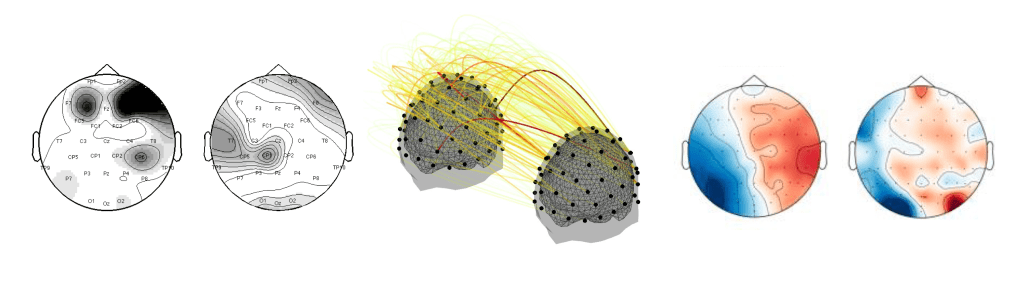
Hyperscanning has become a popular methodology for quantifying inter-brain synchronization, enabling investigation of interpersonal neural processes during social interaction. However, inter-brain mechanisms are still poorly understood, and the theoretical foundations of hyperscanning research are still in development. In other words, given that these technologies are available, are we now tackling the right questions?
We investigate inter-brain mechanisms and methods, focusing largely on quantifying not only synchronised but asymmetric neural processes, which may ultimately reveal novel neural signatures of social cognition and interaction. Moreover, we work on developing new dynamical systems and machine-learning methods, and investigating currently established ones, in order to work toward better standardisation and replication in the field of hyperscanning.
Selected publications:
Li, Q., Zimmermann, M., Konvalinka, I. (2025). Two-brain microstates: a novel hyperscanning-EEG method for quantifying task-driven inter-brain asymmetry. Journal of Neuroscience Methods, 110355.
Zimmermann, M., Schultz-Nielsen, K., Dumas, G., Konvalinka, I. (2024). Arbitrary methodological decisions skew inter-brain synchronization estimates in hyperscanning-EEG studies. Imaging Neuroscience, 2, 1-19.
Zamm, A., Loehr, J. D., Vesper, C., Konvalinka, I., Kappel, S. L., Heggli, O. A., Vuust, P., Keller, P. E. (2024). A Practical Guide to EEG Hyperscanning in Joint Action Research: From Motivation to Implementation. Social Cognitive and Affective Neuroscience, 19(1), nsae026.
Konvalinka, I., Bauer, M., Stahlhut, C., Hansen, L. K., Roepstorff, A., Frith, C. D. (2014). Frontal alpha oscillations distinguish leaders from followers: Multivariate decoding of mutually interacting brains. Neuroimage, 94, 79-88.
Konvalinka, I. & Roepstorff, A. (2012). The two-brain approach: how can mutually interacting brains teach us something about social interaction? Frontiers in Human Neuroscience, 6:215, p. 1-10.
Mapping social network properties onto social interaction dynamics
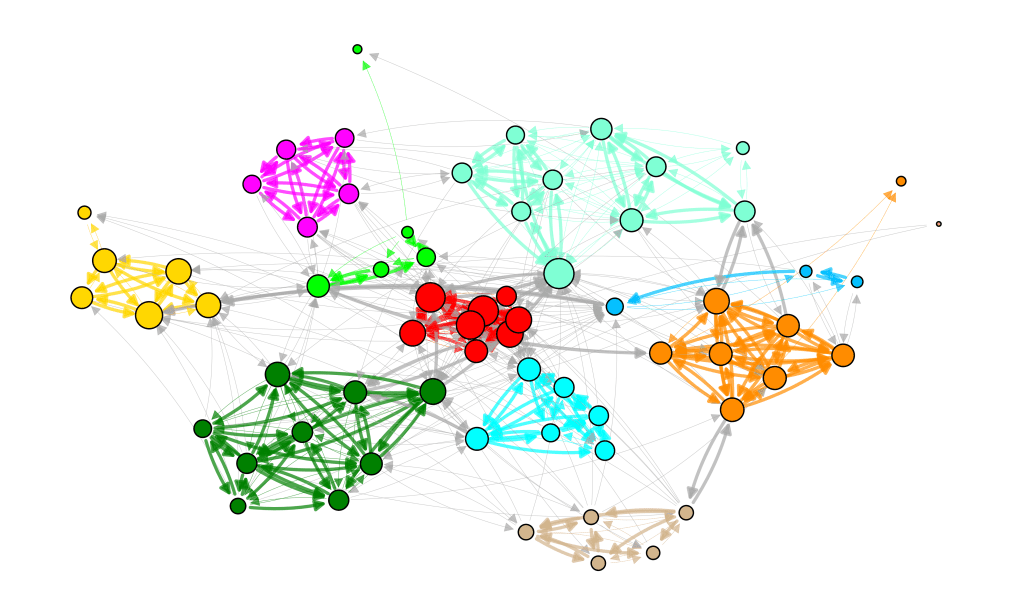
The interpersonal factors that drive different social interaction mechanisms remain poorly understood, as the field of social neuroscience/cognition has largely focused on the “averaged” individual mechanisms. We are interested in how high-level social properties that emerge from social interactions across longer time-scales, such as social network properties, modulate and predict real-time social interaction and brain dynamics in dyads and groups.
Specifically, we are working on tying social network properties and relational factors to real-time interpersonal coordination mechanisms and brain dynamics.
Interpersonal Physiological Synchrony
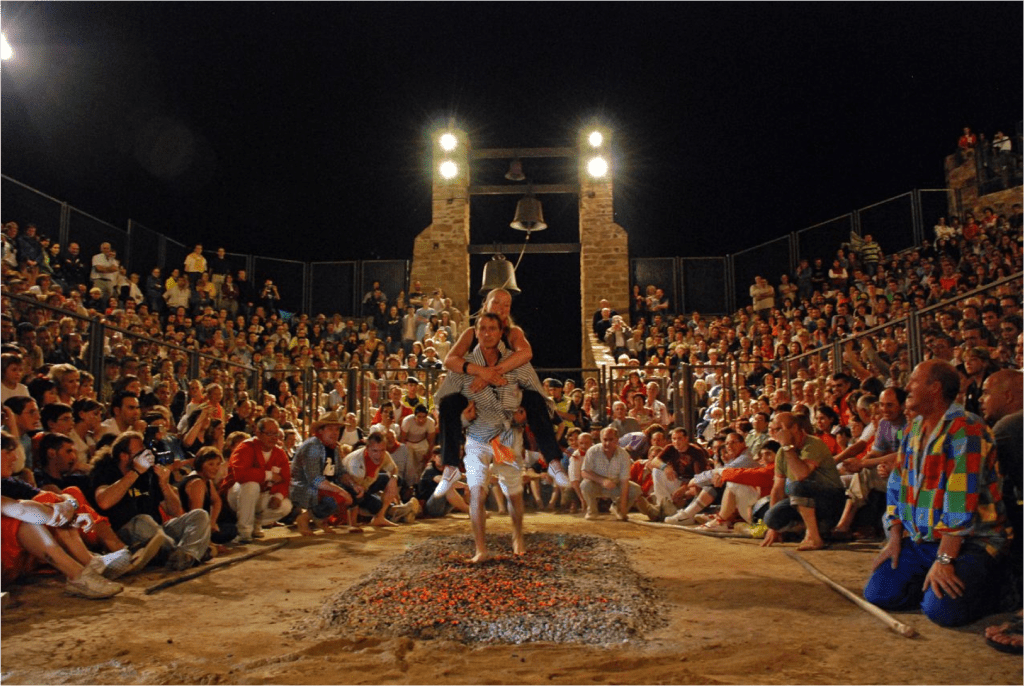
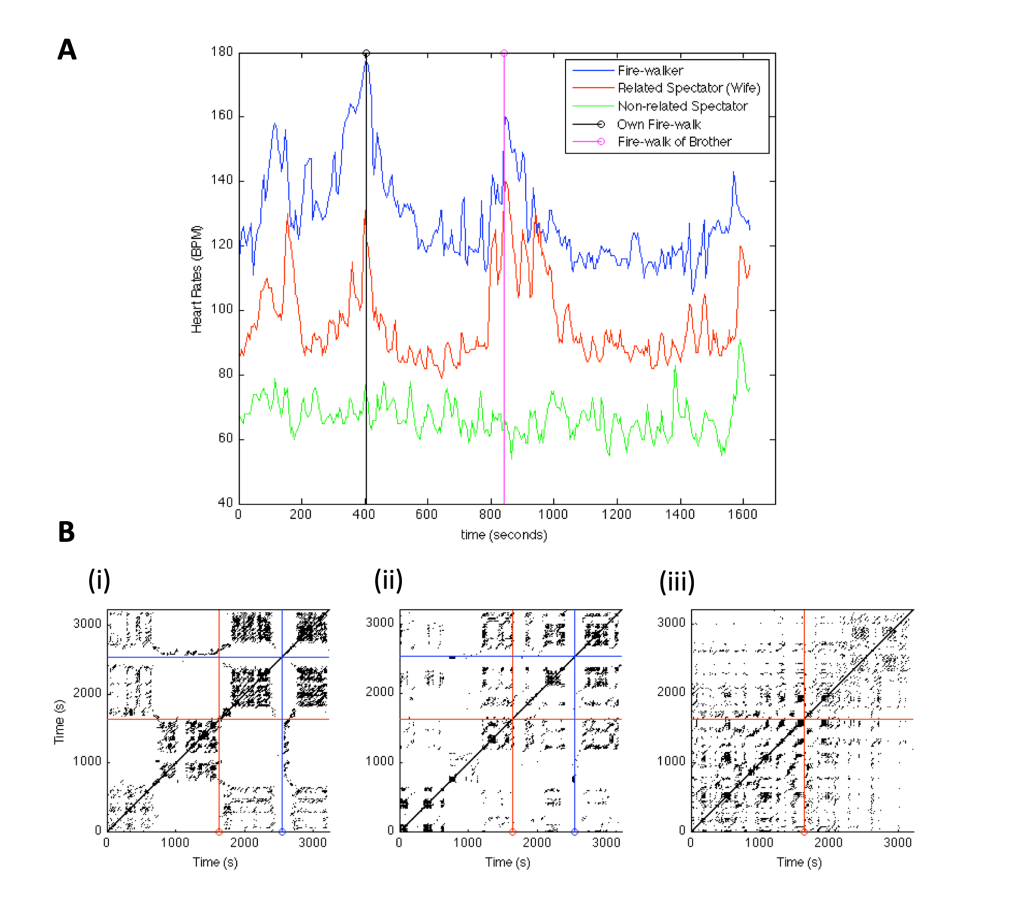
Numerous studies are beginning to show that when people engage in social interaction, or are merely socially situated, they synchronise their physiological rhythms together – and this may be an important mechanism underlying shared attention and social bonding. We investigate the mechanisms of interpersonal physiological synchrony (IPS), and how IPS emerges across different social contexts: both in lab-based settings, as well as real-world ecological settings such as high arousal rituals, city exploration trips, and even haunted horror houses.
Selected publications:
Konvalinka, I., Sebanz, N., & Knoblich, G. (2023). The role of reciprocity in dynamic interpersonal coordination of physiological rhythms. Cognition, 230, 105307.
Konvalinka, I., Xygalatas, D., Bulbulia, J., Schjødt, U., Jegindø, E.-M., Wallot, S., Van Orden, G., Roepstorff, A. (2011). Synchronized arousal between performers and related spectators in a fire-walking ritual. Proceedings of the National Academy of Sciences of the United States of America (PNAS), 108(20), 8514-9.
Xygalatas, D, Konvalinka, I., Bulbulia, J., Roepstorff, A. (2011). Quantifying collective effervescence: heart-rate dynamics at a fire-walking ritual. Communicative & Integrative Biology, 4(6), 735-738.
Fischer, R., Xygalatas, D., Mitkidis, P., Reddish, P., Tok, P., Konvalinka, I., Bulbulia, J. A. (2014). The fire-walker’s high: affect and physiological responses in an extreme collective ritual. PLOS ONE, 9(2), 1-6.
Mother-baby synchrony
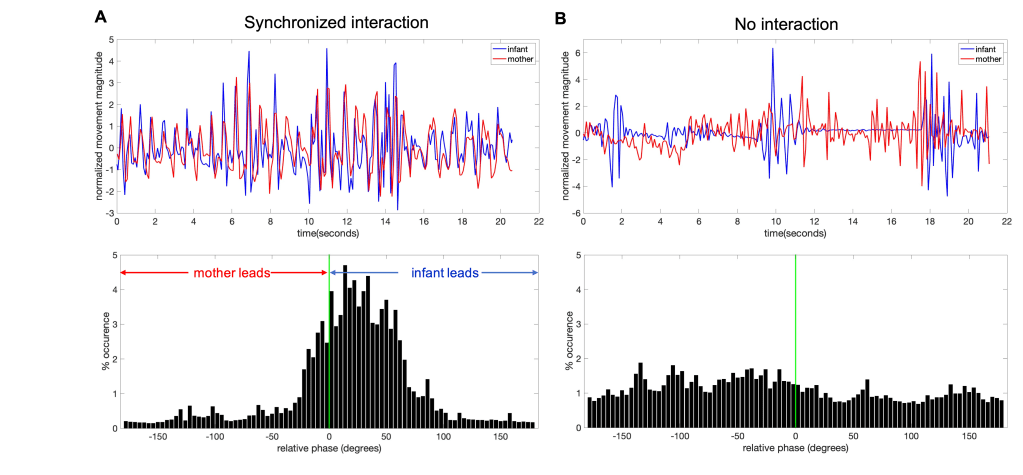
In collaboration with Victoria Southgate and the Centre for Brain and Cognitive Development, we have just started a new project which aims to measure mother-baby synchrony in ecological real-world settings. We are interested in how the varying degrees of mother-baby synchrony in every day life contribute to the development of the self.
More to come…
 SINe Lab